The Pin-Level Method

Local search is won location by location. So we build, measure, and improve every location against its own market.

This is our six-stage system for building locations that can be tracked, compete, and grow on their own. This method works whether you're strengthening an existing office or preparing to open the next one. This page shows you the machinery behind the results.

Scan My Locations Free
The physics of local rankings

Why does one office rank while another disappears?

Because every office competes in a completely different local search environment. A patient searching near Location A may see a completely different set of practices than someone searching near Location B. Distance matters and is the biggest ranking factor, but so do relevance and prominence, which means visibility changes point by point across the market.

A
Office Aits market, its competitors
B
Office Ba different market entirely
Without per-location work, visibility weakens between locations. This leaves open large gaps closer and closer to your offices that competitors start to take instead.
C
Office Cweak visibility across its surrounding market

Each area: how that office’s visibility changes across the surrounding market. The more locations in the area, the more precise the plan.

Grey dots: the competitors patients may see around each office. The competitive set changes by search location.

5 offices = 5 local battles

Each office enters its own competitive environment. Your flagship’s visibility or website does not automatically make a newer office visible. Every location needs enough local relevance, reputation, and authority to compete where it actually operates.

The top results take the attention

The top local results capture a disproportionate share of high-intent attention. The farther an office falls from those visible positions, the more it struggles to fill its schedule, needs support from better performing offices, needs more ad spend, and loses money.

Market by market

Every office faces a different competitive set. The practices outranking Location B may be completely different from those competing with your flagship. That is why the work has to be prioritized market by market and not based on the website's competitors.

The six stages

What are the six stages of the Pin-Level Method?

Pinpoint, Prioritize, Prime, Propagate, Prove, Playbook. First we determine where every office stands and where growth actually matters. Then we build, execute, measure, and turn what works into a repeatable system for the group. Every stage produces a clear output we can be accountable to.

Select any stage to look inside it.

Inside Pinpoint

One number, and the band it falls in.

The score is built from public Google data for that location. This means map rankings on the searches that pay, profile strength, page coverage for that office, and the sources referencing it. Where a location lands decides what happens next.

70 to 100, getting its share of new patientsDEFEND
40 to 69, losing patients to the practices above itCLOSE THE GAP
0 to 39, patients never see itINVISIBLE

Every re-scan uses the same scale, so the bands mean the same thing in month one and month twelve.

Inside Prioritize

A low score doesn’t automatically mean “spend here.”

About one-third of dentists reported they were not busy enough in Q1 2026, according to the ADA Health Policy Institute. Plenty of others are full. Before we recommend pointing budget at an office, we weigh its score against what it can actually absorb. Provider availability, open chair time, and your goals for it.

Strong visibility, full scheduleMAINTAIN
Weak visibility, open capacityGROWTH PRIORITY
Weak visibility, staffing constrainedFIX OPERATIONS FIRST
Inside Prime

We fix the base before anything gets published.

Prime is a specific fulfillment punch list, per office. This foundation involves all of the assets and tracking that help make the location more successful, and are likely to impact the performance of the entire group as a whole.

Location and service pages, thin or missingBUILD
Profile categories wrong for its marketREBUILD
Calls and forms untracked at that officeINSTRUMENTAL
Inside Propagate

Diagnose, prioritize, execute, then do it again.

Propagate is the part that compounds, and what it produces depends on the gap that office currently has. The progress record shows what ran at which location and when, which means a quiet month is visible instead of assumed.

Page and service coverage for that marketGAP-LED
Reviews, reputation, and responseCONTINUOUS
Local authority and conversion assetsAS PRIORITIZED

Every line is dated and attached to a location. Nothing is recorded at the brand level.

Inside Prove

The scoreboard checks itself before you have to ask.

Each office is re-scanned on the same scale it started on, and its pace is measured against the written six-month target.

Ahead of its target paceON TRACK
Behind pace at month fourFLAGGED, WITH A PLAN
Short of the number at month sixCREDITED

You read the same report we do. Month six is never the first time you hear the number.

Inside Playbook

What worked becomes the map for the next pin.

Once a location holds its ring, the question changes from visibility to expansion. The playbook grades your markets so the next lease is a decision with data behind it, not a hunch.

Ring held, market saturatedREADY FOR THE NEXT OFFICE
Still climbing in its own ringKEEP RUNNING THE ENGINE
Candidate area, competitors densePROCEED WITH EYES OPEN

You own the playbook. It stays yours whether or not we keep working together.

What does “its own engine” actually mean?

It means every office gets the local assets and signals it needs to compete in its own market in local search. Let's say you have "Location No. 3", the one that's been bothering you outside of work hours. Here is what gets built for it, and nothing else.

Its pages

  • Location-based content, built for its neighborhood
  • Dedicated coverage for the priority services patients search for in that market
  • Its own doctors, photos, directions, videos

Its Google profile

  • Completely optimized and tracked
  • Real photos of that office and team
  • Profile activity maintained

Its review momentum

  • Reviews requested from its patients
  • Reviews monitored and responded to consistently in the practice’s voice
  • Velocity tracked against its competitors

Its report card

  • Pin Parity Score 0-100
  • Visibility,  rankings, ROI, and accountability, by office
  • Calls, bookings, available business outcomes, by office
The patient journey

What happens after a patient finds you?

Visibility wins the search. The journey decides whether the search becomes a patient, and whether your marketing investment produces an ROI. They may be different locations, but the experience must be consistent.

1

Awareness

They have a need and they search online, typically on Google but other platforms like Bing and Apple are used too. They are shown offices near them who best fit their specific search criteria. Potential patients begin to select multiple choices mainly based on the following: Ad prominence, review count and rating, initial images, location.

After selecting their choices (sometimes up to 10), they begin to narrow them down in the Research phase below. The top three map spots in Google are one of the most valuable spots, take roughly 44% of the clicks, and are almost always in a person's comparison.

We run

Per-office visibility: the map pack, GBP optimization, search ads, Local Services Ads, authority citations.

You own

Nothing yet. This stage is ours.

2

Research

You made it through the first narrow-down and your office is still in the running. Now a potential patient starts reading reviews in more detail, visiting your website, looking at your content, first time visit information, payment options, and more. This is when you start serving the patient, not when they walk through your doors. This is the phase where a patient will narrow their choices down to only one, so it's important that you win against nearby offices in this step.

We run

A conversion-built website, review velocity, and a real photo and video presence for each office.

You own - we arm you

The raw material of real photos and videos from your practice. We send the list.

3

Booking

They've chosen your office and call or book. Unfortunately, this is where most practices quietly lose new patient opportunities. Booking must be easy and break through the distraction of daily modern life. Online scheduling requests, follow ups, clear expectations and committments set. Phone call handling must be precise, handle common questions and objections, and get the appointment. The experience set online must match their first interaction with your practice here.

We run

Instant text-back, follow-up nurture, appointment reminders, no-show recovery. A lead never sits in silence.

You own - we arm you

Answering fast and staying consistent. We give you resources to help with consistency.

38%

of calls to dental practices go unanswered during business hours. Marketing pays for every one of them.

4

Experience

From the moment they walk through your doors, to the greeting, to the treatment plan, to the yes. This is your in-person patient experience, and where you should track and measure crucial performance numbers that will help your practice grow predictably and consistently.

We run

We measure answer rates, call insights, treatment acceptance, cost per booked patient, actual return on ad spend and ROAS so a leak shows up in your report instead of your P&L statement later.

You own - we arm you

The visit itself - and case acceptance. We arm it: proven offer shapes, financing-first presentation, front desk scripts.

5

Retention & Referral

Streamlined review requests, recall, loyalty, and ongoing content to stay top of mind. This all increases the changes of referrals that come when the four of the previous steps are executed well.

We run

The review engine and measuring your overall velocity.

You own - we arm you

Actually asking - and following through on recall.

Stage five feeds stage one

Any office that runs this journey well climbs the map pack, which makes every stage before this one cheaper. The journey is a flywheel that continues to compound over time.

When should you expect movement?

The first months are foundation and execution. By Day 14, patient acquisition systems and tracking for your enrolled locations can be put into place to start generating opportunities quickly. Meaningful organic visibility movement usually develops over the months that follow, but every market behaves differently. That is why we establish a baseline and written milestone instead. Select each phase to see what it looks like from your side.

Early progress is measured by completed foundations and verified execution.

Campaigns are launched, pages get built, profiles get rebuilt, tracking goes live, and every location's baseline score gets locked.

  • Baseline scores locked
  • Pages and profiles built or rebuilt
  • Call and lead tracking live

Rankings start moving, and the re-scans show it per office.

Map positions climb on the searches that matter, and the offices that were invisible begin showing up better in their own markets.

  • Re-scans against each office's baseline
  • Map positions climbing on paying searches
  • Leads, new patients, and ROI reported by office

Month six is where we're accountable.

This timeline is exactly why the guarantee checkpoint sits at month six. Your agreement states each location's required score improvement by now.

Read the No Weak Location Guarantee →

    Locations continue to improve their scores & defend them.

    The engine keeps running, growth momentum keeps building, and the playbook starts answering the bigger question. As a market matures, the data shows whether the group may be ready to expand and which areas are worth comparing.

      What does the method look like in practice?

      Sweet Tooth map or scoreboard image
      680 New Patients

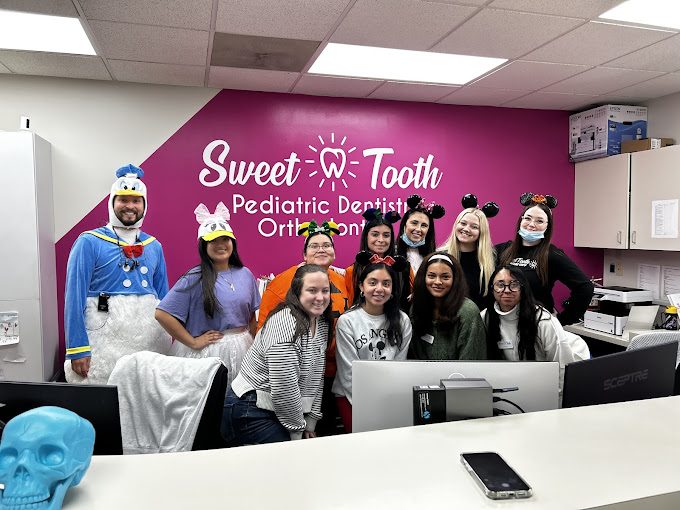
      Sweet Tooth locations reached top-three Maps visibility in the tracked markets, while the practice expanded from one office to eight in four years. Last month, they received 680 new patients from local search alone.

      Mint Dental map or scoreboard image
      134 New Patients

      Mint Dental’s implant production, while all four tracked locations reached top-three Maps visibility, up from two of four. Last month, they received 134 new patients from local search alone.

      About the method

      Questions owners ask about how this works.

      How is each location scored?

      Each location gets a Pin Parity Score from 0 to 100, measured against the strongest competitors in its own market. Every re-scan uses the same scale, so progress is comparable month to month and office to office. It is public Google data you can check yourself, and the yardstick never changes after you sign.

      Do all of our locations get the same plan?

      No. That's what the Prioritize phase is for. An office at 76 defending the top 3 needs different work than an office at 31 that's invisible. Each location's plan follows its own score, its own competitors, and the services that pay in its market. The stages are the same but the work inside them never is.

      Which office do you start with?

      The one with the biggest gap that can actually absorb new patients. A weak score at an office that's already booked solid is not the place for your next dollar. We weigh every location's score against its real capacity and hand you the call with the reasons attached, including which offices we would deliberately not touch yet.

      What if an office is already in the top 3?

      It gets defended and deepened. Top-3 positions are attacked constantly by competitors running their own campaigns. A ranking office shifts toward the services that produce most, holding its map positions while the effort budget moves to the offices that need it. That trade-off is made with numbers, in Prioritize, not by feel.

      Does the method change for a rural office versus a metro one?

      The stages don't change but the market definitely does. A rural office may face two real competitors, while a metro office faces twenty. The targets, and the monthly work differ per location. A score of 60 in a small town and a 60 downtown tell us if a location is ready to win in it's own race.

      Can we run this on only one location?

      Yes. Many groups start with their weakest high-opportunity office, and the rest of the group still appears on your scoreboard so you can see what changes when one location gets the full engine. It's also the cleanest way to judge us without touching your other relationships.

      What happens if a location isn't moving?

      The Prove phase catches it before you have to ask. If an office is behind pace at month four, you hear it at month four, with the adjustment plan attached. Month six is never a surprise.

      Do you handle the front desk or patient experience?

      No, we do not. We run everything that gets a patient calling your phone and to your door, but your team owns the conversation and the visit. What have resources to arm that side: front desk scripts, proven offer shapes, a financing-first presentation.

      Stage one takes 3 minutes. It's free.

      Pinpoint is where every engagement starts, and you can run it right now: every location scored 0 to 100 against its own market, results on screen.

      Scan Now for Free

      Seen enough? Skip ahead: Book my Pinpoint Audit