

Dental Marketing for Growth-Focused Practices
How to Dominate Search and Scale Your Dental Clinic
If you're serious about growing your dental practice, you need visibility dominance to bring in a steady and consistent flow of high quality patients.
The best source for these new patients is Google, and practices that show up in the maps, paid search, and organic results get the majority of new patients monthly, while other practices compete for what is leftover.
But it isn't enough to just build a nice looking website and run ads.
Plenty of dental practices do this and still struggle to rank in the map pack, generate fewer than 30 new patients per month, and see a disappointing ROI despite spending thousands per month.
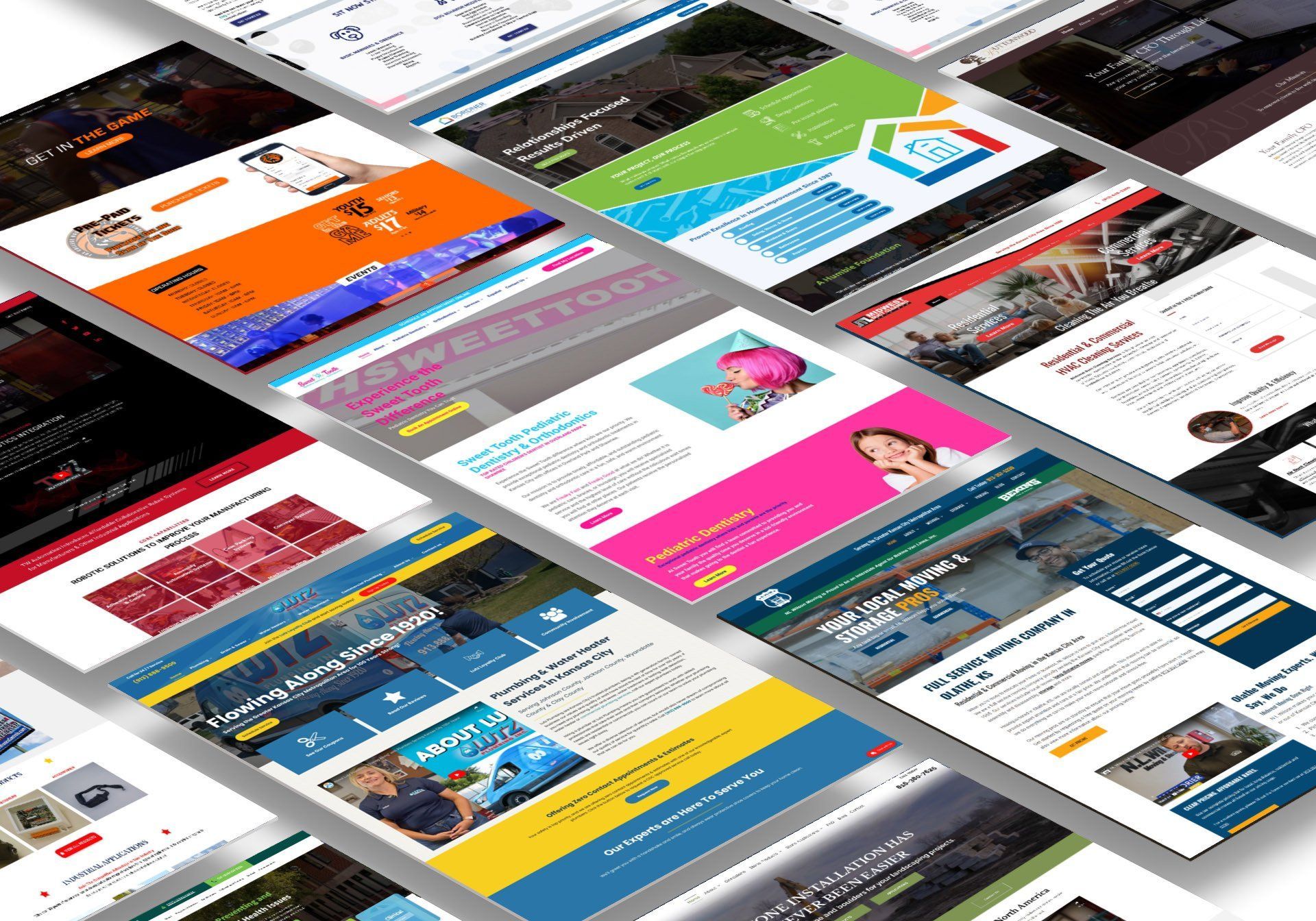
We've reviewed plenty of dental practice websites, and the #1 reason this happens is because their website was built for the practice and not for the patient.
Here's the exact approach we used to help a pediatric practice grow from 1 to 8 locations and dominate search in their entire metro.
About Tekkii
Step 1: Build a Patient-First Dental Website
Your website is the foundation of how well you show up in search, and it heavily influences a patient's likelihood to convert.
If your website is like most, it's designed for the doctor or aesthetics, and not for how patients actually search and make decisions today.
When new patients find you from Google, they aren't just looking at your website, they're looking at 2 - 5 other dental practice websites as well. Your website must be structured to answer a patient's questions and set strong expectations before they ever pick up the phone.
It only takes 5 seconds for a parent or busy professional to scan your website and determine if they're staying or going to a competitor. Your website must be built around patient psychology over internal preferences.
Just getting this right can boost your new patient conversion rates without any additional SEO or ads investment.
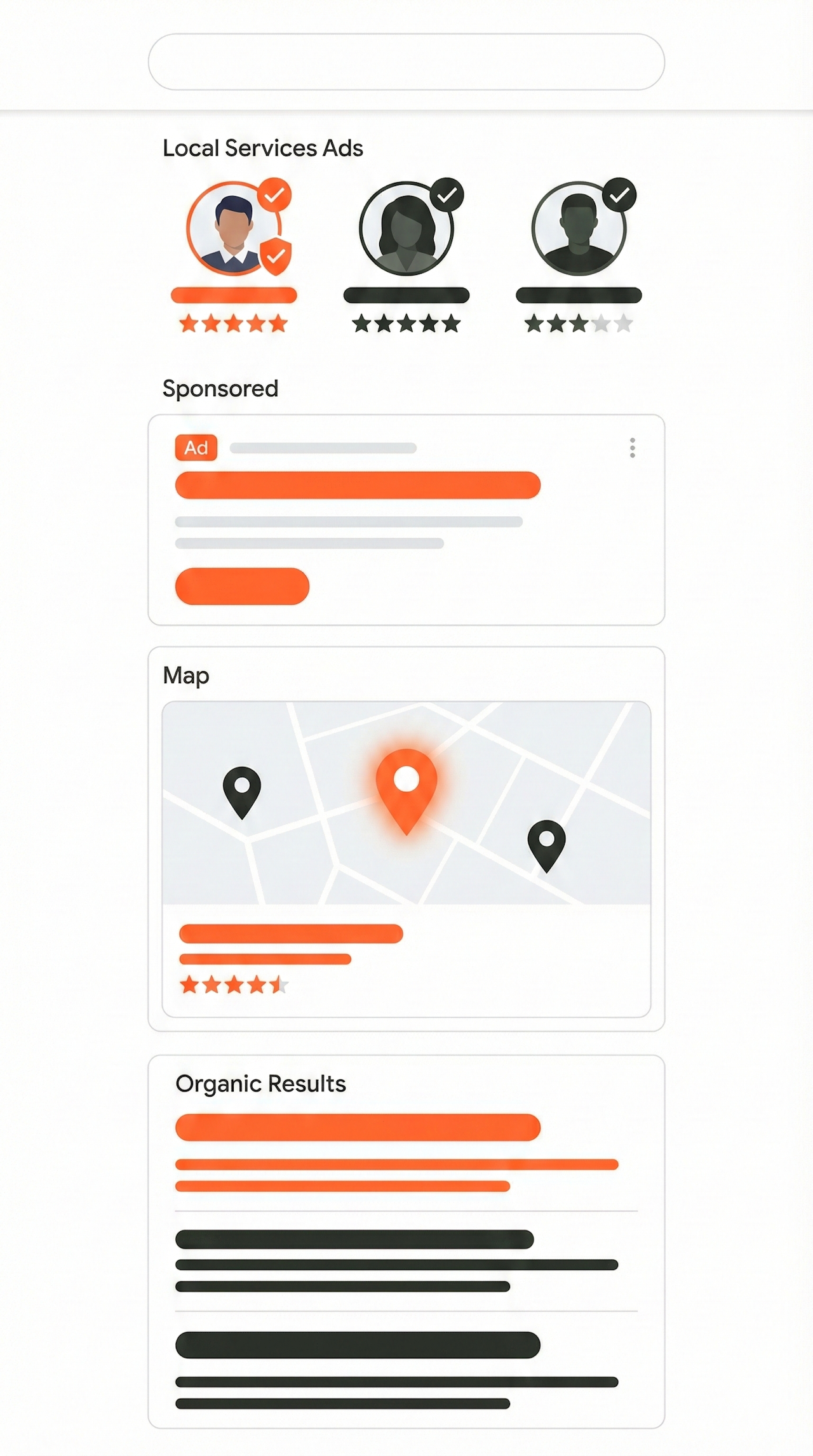

Step 2: Capture Immediate Demand
Once you have your website setup and ready to convert, it's time to quickly capture the immediate demand for treatment in your area by using Google Adwords and Google LSA.
These two platforms will put you in front of new patients at the exact moment they are looking for a specific treatment in your area. These are high-intent patients ready to get on your calendar and into your chair.
The key to paid search is precision. Specific locations, specific searches, specific treatments, specific landing pages, and everything tracked and measured. This keeps you from overspending, understanding your ROI, and allows you to scale your ads effectively over time.
While your organic SEO and Google maps visibility builds over time, paid search gets you immediate traction and new patient flow without needing to wait too long.
Think of paid search as bridging the gap between where you are today and where your organic visibility will be in the coming months.
Step 3: Build Long-Term Dental SEO & Dominate The Google Map Pack
While paid search accelerates visibility for your practice, SEO and Map Pack dominance are where dentists create long-term market leadership. You should start building this from day one.
The Google Map Pack often drives the majority of high intent local patient phone calls and is responsible for up to 70% of local clicks. There's only three top spots, and if your practice is not consistently visible, the competition absorbs the majority of the demand, even if you're reputation is stronger.
Unlike Google Ads, SEO compounds over time without needing to spend more on clicks. Instead of your performance being directly tied to how much money you're spending, it's tied to how you build your authority over time.
This will reduce your reliance on paid traffic over time and reducing your new patient costs as demand becomes more predictable. This is how you dominate your local area.
Step 4: Install Lead Accountability Systems
Generating and capturing high intent patient inquiries is only a part of the equation. You need strong accountability systems that track every patient inquiry, where they came from, and how they've been handled. This should be happening alongside the setup of your website, ads, and SEO strategies.
Call tracking, instant notifications, missed call handling, and reminder systems ensure that a majority of opportunities are not silently lost, or ghost out of nowhere. This is especially painful for practices running paid search, as they often waste anywhere from 60% - 80% of their budget due to poor or nonexistent tracking.
When you can quickly determine what is working and what isn't, you gain instant clarity to make informed decisions about growth and staffing.
Step 5: Replicate The System Into New Locations
This is a huge part of growth that many practices get wrong. They try to open new practices without first building a proven demand engine in one market.
Expansion isn't about starting from scratch, it's about deploying a structured, repeatable rollout of assets that will allow you to build immediate traction in the area. This includes location pages, new Google Business Profiles, aligning local authority, and duplicating paid search campaigns strategically.
This is the exact strategy that has allowed one pediatric practice we work with to expand from a single office to now eight offices. We can definitively say they are the #1 pediatric dentist in the entire metro area.
If you want to be a market leader in your metro area, a critical component is performing all five of these steps in order when building your predictable growth engine.
Here's Proof That It Works
But Will It Work For Your Practice?
This system works, but only if your practice is ready to grow.
#1 - Your patient experience and care must already be very strong. Patients must love your practice.
#2 - Your online reputation shows strong, positive reviews.
#3 - Your team answers calls live during business hours and can commit to responding to inquiries within 5 - 10 minutes.
#4 - You have operational capacity for increased new patient volume.
#5 - You and your leadership are actually committed to scaling, not just trying things out.
Three Map Grids, Three SEO Strategies
Your SEO strategy and approach should be based on what your current map rankings look like. Performing SEO without actually understanding what you need to focus on next is like flying blind.
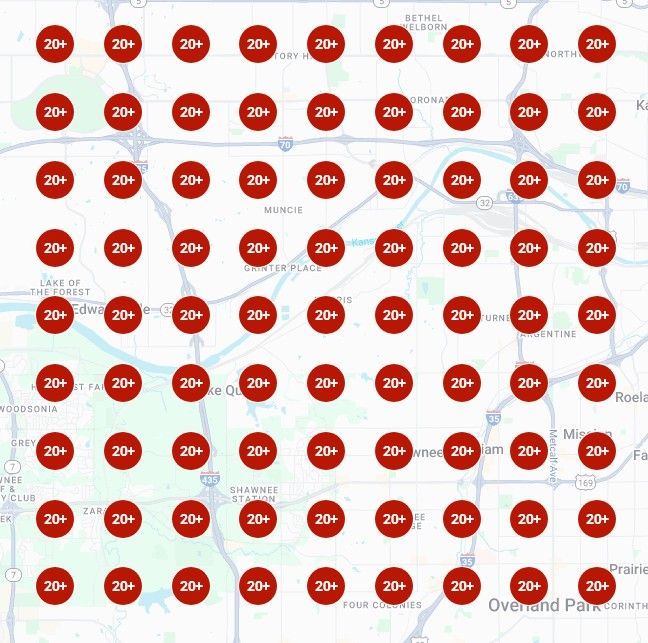
All Red
An all red map means Google doesn't trust you enough to recommend you. As a result, you are completely invisible on Google Maps to customers searching in your area.
Your primary focus should be to build up that trust immediately.
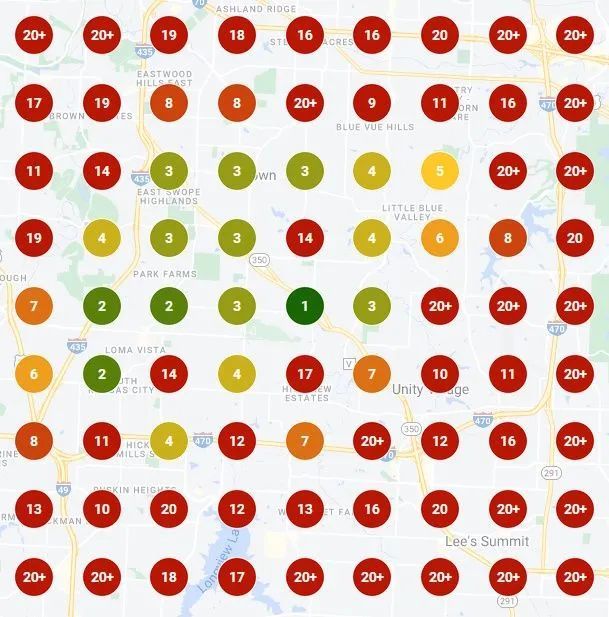
Green in the Middle
Green in the middle means that Google trusts you in the immediate area surrounding your business, but any further than that.
Your primary focus here should be to get more proof that you serve customers many miles away from your physical office.
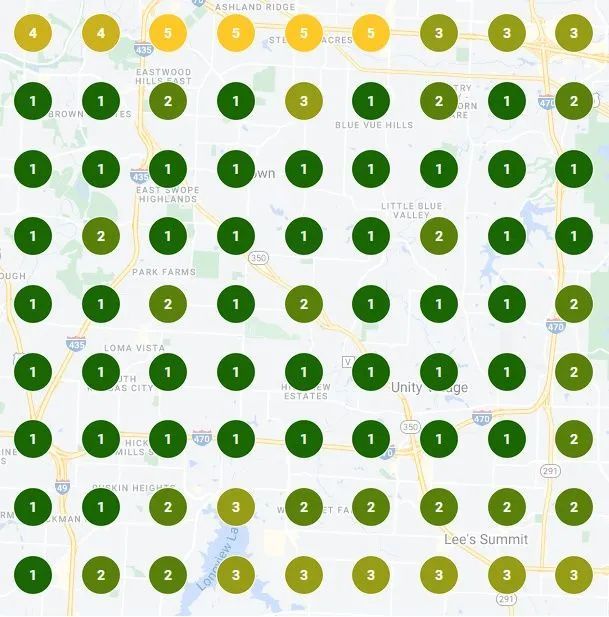
Mostly Green
Mostly green means that you are trusted and referred by Google for the services you offer.
From here, you can continue to optimize further to maintain your position, or try and optimize for another part of your metro area.
How We Make You the Clear Choice for People, & Search Engines
Local SEO is about proving to search engines that you are who you say you are, you do what you say you do, and you are doing it better than other competitors in your area.
When you say that you're the best invisalign provider in Overland Park, KS, search engines are going to ask you to prove it. We help you do just that while also taking care of the technical stuff on your behalf.
- Completely Optimize Your Google Business Profile
- Optimize Your Website To Compliment Your GBP
- Write Or Adjust Localized Content
- Help Implement A Review Generation Strategy
- Fix & Manage Local Listings
- Manage Your Google Business Profile & Keep It Updated
- Obtain References From Local Websites
- Continue to Build Relevance Long-Term
Frequently Asked Questions About Local SEO
How long does it take to see Local SEO results?
The common saying is that "it takes 3 - 6 months" but in reality, you can see results in 6 weeks. SEO is a collaborative effort with things our team does and thing your team does. Even still, if your map is red, it'll take a bit longer than if your map is green in the middle.
Do I need a website for Local SEO?
Not really, but it's so much more effective and faster if you have one. This is because your website is one of the strongest assets you can actually control when it comes to backing up the claims your Google Business Profile says about your business.
What’s the difference between Local SEO and PPC?
Local SEO takes time and builds up your visibility over a period of months, whereas PPC can start getting you clicks and leads in a matter of weeks.
However, your Local SEO investment is usually stable and continues to grow, while your PPC investment needs you to spend more money for more results.
Can you manage my Google Business Profile for me?
Yes. We handle full GBP management, including photo uploads, review responses, and keyword optimization.
How much does Local SEO cost?
Our Local SEO prorgram starts at $1,995 / mo and includes everything you'll need to rank in the top 3 of Google Maps. We give you the blueprint and roadmap to establish, improve, and grow your organic rankings and attract more quality customers.